
Measles is highly contagious. Due to ongoing international outbreaks, the virus can easily enter the campus through international travel and exchange. Research shows that immunity from the MMR (Measles, Mumps, and Rubella) vaccine declines over time. Since most college students received their last dose about 15 years ago and engage in frequent social activities, the risk of campus clusters is heightened.
I. Early Symptoms: It Looks Like a Cold—Be Careful!
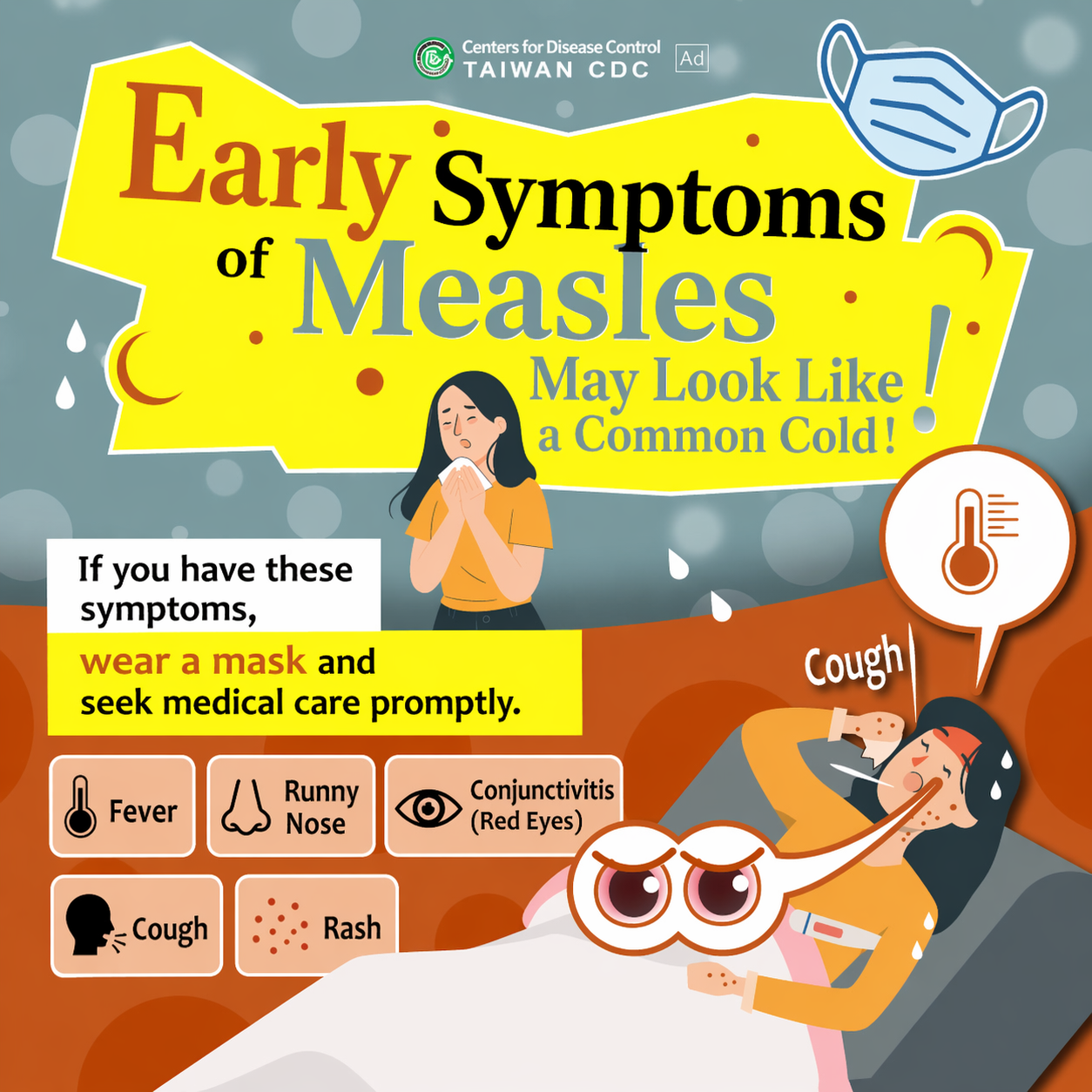
If you experience suspicious symptoms, please wear a mask and seek medical attention immediately.
5 Key Symptoms :
- Fever
- Rhinitis
- Conjunctivitis
- Cough
- Red Rash
II. Preventive Measures
1. Maintain Personal Hygiene
- Wash your hands frequently.
- Avoid touching your mouth and nose.
- Practice cough etiquette and wear a mask when necessary.
2. Health Monitoring After Entering from Outbreak Areas
- Monitor your health for 3 weeks after arrival.
- If symptoms such as fever, rash, or cough occur:
- Do not go to work or class.
- Seek medical attention immediately while wearing a mask.
- Inform the doctor of your recent travel history.
3. Precautions Before Traveling Abroad
- For those born in or after 1966:
- It is recommended to visit a "Travel Medicine Clinic" 2 to 4 weeks before departure to evaluate the need for a self-paid MMR vaccine dose.
- Maintain strict personal hygiene during your trip to reduce infection risks.
III. Q&A: Frequently Asked Questions
Q1: Why do college students need to worry about Measles if they were vaccinated as children? A: Although most students completed their MMR series in childhood, antibody levels naturally decline over time (typically after 15 years). In a crowded campus environment, this decrease in immunity makes students more susceptible to infection.
Q2: What should I do if I suspect I have Measles? A: Immediately put on a surgical mask and go to a hospital for evaluation. To prevent spreading the virus in the waiting room, please call the clinic ahead of time or inform the triage desk about your symptoms and travel history immediately upon arrival.
Q3: Where can I get more information?
A: For more details, please visit the Taiwan Centers for Disease Control (Taiwan CDC) website or contact the University Health Service Division.
Health Service Division cares about you.