
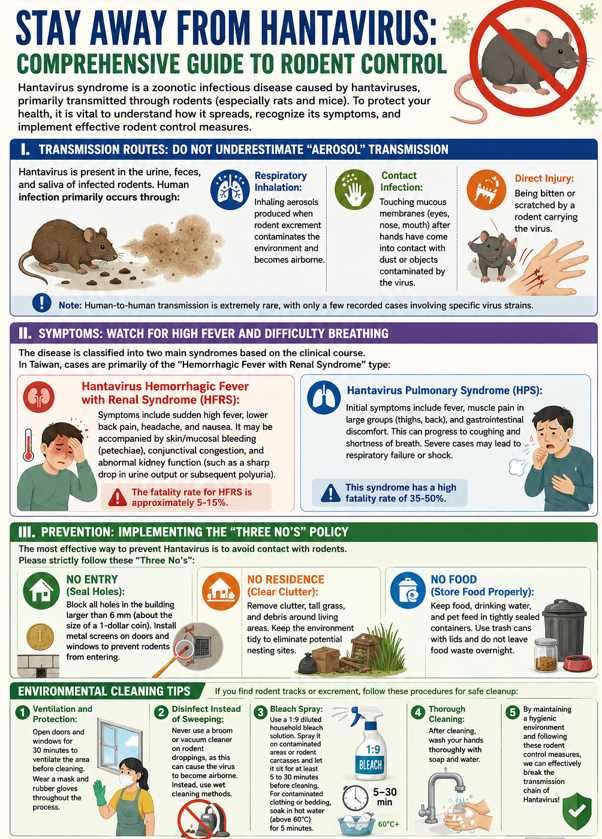
Hantavirus syndrome is a zoonotic infectious disease primarily transmitted through rodents (especially rats and mice). To protect your health, it is vital to understand its transmission routes, recognize symptoms, and implement effective rodent control measures.
I. Transmission Routes: Beware of "Aerosol" Transmission
Hantavirus is present in the urine, feces, and saliva of infected rodents. Human infection primarily occurs through:
- Respiratory Inhalation: Inhaling aerosols produced when dried rodent excrement is disturbed and becomes airborne.
- Contact Infection: Touching mucous membranes (eyes, nose, mouth) after hands have come into contact with contaminated dust or objects.
- Direct Injury: Being bitten or scratched by an infected rodent.
- Note: Human-to-human transmission is extremely rare.
II. Symptoms: Watch for High Fever and Respiratory Distress
Symptoms vary by syndrome. In Taiwan, "Hemorrhagic Fever with Renal Syndrome" is the more common type:
- Hemorrhagic Fever with Renal Syndrome (HFRS): Symptoms include sudden high fever, lower back pain, headache, and nausea. It may involve skin/mucosal bleeding (petechiae), conjunctival redness, and acute kidney dysfunction.
- Hantavirus Pulmonary Syndrome (HPS): Initial symptoms include fever, severe muscle pain (thighs, back), and gastrointestinal upset, progressing to coughing and shortness of breath. This type has a significantly higher fatality rate.
III. Prevention: The "Three No's" Policy
The most effective prevention is to avoid rodent contact by following these steps:
- No Entry (Seal Holes): Block all gaps larger than 6 mm (approx. the size of a 1-dollar coin). Install metal mesh screens on doors and windows.
- No Residence (Clear Clutter): Remove piles of debris and tall grass around living areas to eliminate nesting sites.
- No Food (Secure Storage): Keep food, water, and pet feed in tightly sealed containers. Use trash cans with lids and dispose of food waste daily.
Cleaning Tips: How to Safely Clean Up Rodent Signs
If you find rodent droppings or tracks, follow these safety procedures:
- Ventilation: Open doors and windows for 30 minutes before starting. Wear a mask and rubber gloves throughout.
- Disinfect, Don't Sweep: Never use a broom or vacuum, as this stirs up the virus into the air.
- Bleach Spray: Use a 1:9 diluted household bleach solution (1 part bleach to 9 parts water). Spray it on the contaminated area or carcass, and let it sit for 5 to 30 minutes before wiping it up.
- Hygiene: Wash your hands thoroughly with soap and water immediately after cleaning.
Resources:
Health Service Division, Yuan Ze University