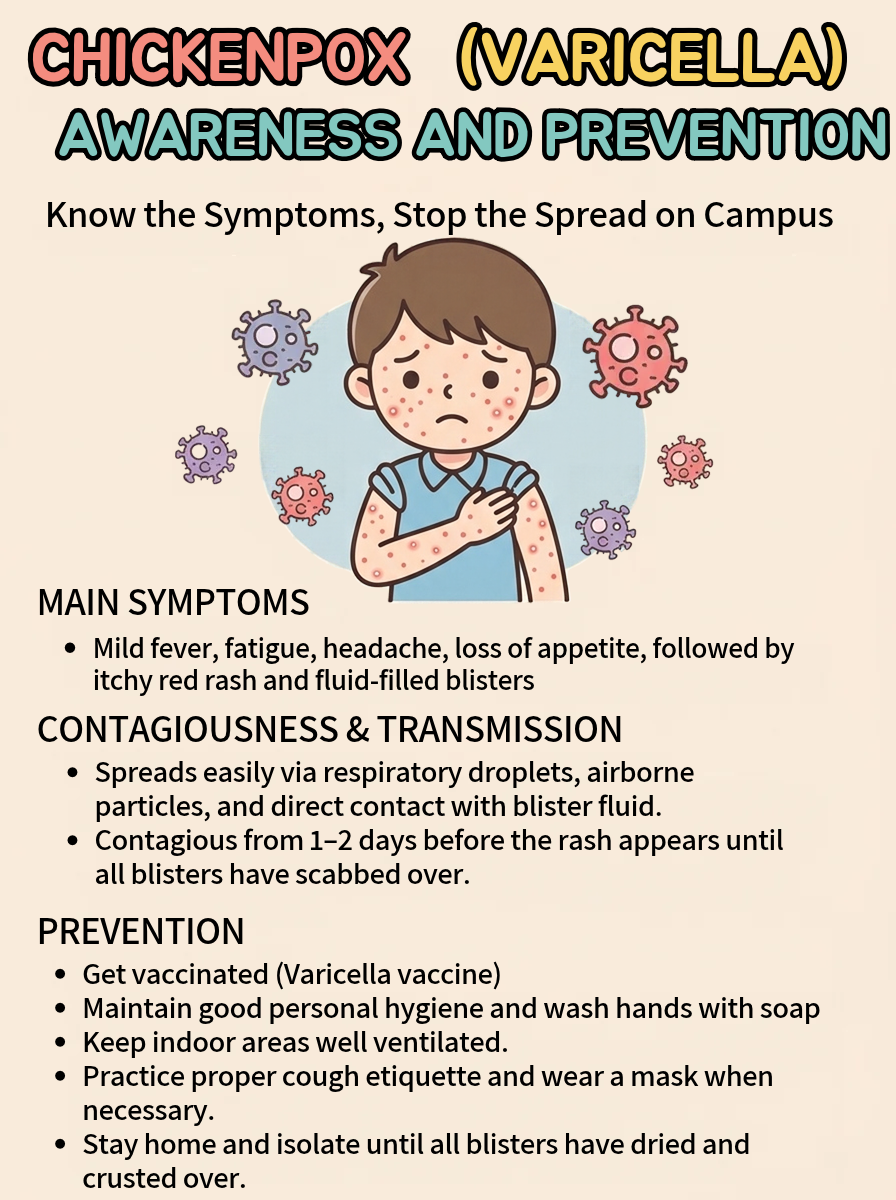
一、發病年齡 Target Age Group
水痘好發於幼兒及學齡兒童,但任何未曾感染或未接種疫苗、缺乏免疫力的人皆可能感染,包括青少年及成人(如外籍大學生及新生)。
成人感染後通常症狀較嚴重,發生併發症的風險也較高。
Chickenpox most commonly occurs in infants and school-aged children. However, anyone without immunity, including adolescents and adults (such as international students and freshmen), is susceptible to infection. Adults generally experience more severe symptoms and have a higher risk of complications.
二、傳染途徑Transmission Routes
- 空氣傳播(Airborne Transmission):吸入患者皮膚水泡液所產生的含病毒氣膠,或患者呼吸道分泌物中的病毒微粒而感染。
- 接觸傳播(Contact Transmission):直接接觸患者水泡液而感染。
- 傳染力極強:患者通常從出疹前1~2天開始具有傳染力,直到全身水泡完全結痂為止。
- 特別注意:曾接種水痘疫苗者仍可能感染及傳染他人。若感染後沒有形成水泡,應以24小時內沒有新病灶出現作為停止傳染期的判斷依據之一。
- Airborne Transmission: Infection occurs through inhalation of virus-containing aerosols from skin lesions or respiratory secretions of an infected person.
- Contact Transmission: Infection occurs through direct contact with fluid from chickenpox blisters.
- Highly Contagious: Patients are generally contagious from 1–2 days before the rash appears until all lesions have crusted over.
- Important Note: Vaccinated individuals can still develop and transmit chickenpox. If lesions do not form blisters, they are considered contagious until no new lesions have appeared for 24 hours.
三、常見症狀Common Symptoms
- 初期症狀(出疹前1~2天):可能出現輕微發燒、疲倦、食慾不振、頭痛及肌肉痠痛等症狀。成人較常出現明顯前驅症狀,兒童則可能直接出現皮疹。
- 皮膚症狀:皮膚出現紅疹,並逐漸發展成紅斑、丘疹、水泡,部分可能形成膿疱,最後結痂。皮疹通常先出現在軀幹、臉部及頭皮,再擴散至四肢,並伴隨明顯搔癢。不同階段的皮疹可能同時存在。
- 突破性感染(Breakthrough Varicella):曾接種水痘疫苗者仍可能感染,但通常症狀較輕微、病程較短,皮疹數量也較少。
- Early Symptoms (1–2 days before rash): Symptoms may include mild fever, fatigue, loss of appetite, headache, and muscle aches. Adults are more likely to experience noticeable early symptoms, while children may develop a rash as their first symptom.
- Skin Manifestations: The rash gradually develops from red spots (macules) into raised bumps (papules), fluid-filled blisters (vesicles), and sometimes pustules, eventually forming crusts. The rash commonly appears on the trunk, face, and scalp before spreading to the limbs, and is often accompanied by intense itching. Lesions at different stages may appear simultaneously.
- Breakthrough Varicella: Previously vaccinated individuals may still develop chickenpox, but symptoms are generally milder, with a shorter illness duration and fewer skin lesions.
四、預防事項 Prevention Measures
- 接種疫苗(Vaccination):接種水痘疫苗是預防水痘最有效的方法。未曾感染水痘、未完成疫苗接種或不確定自身免疫狀態者,建議諮詢醫師,評估是否需要補接種。
- 手部與個人衛生(Personal Hygiene):勤洗手,保持雙手清潔,避免以未清潔的手觸摸眼、口、鼻。
- 環境通風(Indoor Ventilation):保持室內空氣流通,避免長時間處於密閉、擁擠的空間。
- 自主隔離與請假(Staying Home and Isolation):確診或出現疑似水痘症狀者,應儘速就醫,並在家休養,避免到校上課或參與公共活動,直到全身水泡完全結痂變乾,降低校園傳播風險。
- Vaccination: Vaccination is the most effective way to prevent chickenpox. Individuals with no history of infection, incomplete vaccination records, or uncertain immunity should consult a healthcare professional to determine whether additional vaccination is needed.
- Personal Hygiene: Wash hands frequently and avoid touching your eyes, nose, or mouth with unwashed hands.
- Indoor Ventilation: Keep indoor spaces well-ventilated and avoid prolonged stays in crowded, enclosed areas.
- Staying Home and Isolation: Individuals diagnosed with or suspected of having chickenpox should seek medical attention promptly and stay home until all blisters have completely crusted over and dried. Avoid attending classes or public events to prevent campus transmission.
五、通報流程(校園防疫)Reporting Protocol (Campus Prevention)
- 自主通報(Self-Reporting):學生經醫師診斷確診水痘後,應主動通知系所導師及學校衛生保健組(衛保組),以利學校掌握疫情。
- 請假與居家休養(Medical Leave and Home Isolation):依學校請假規定辦理請假,並依醫師建議在家休養,避免出入公共場所,直到符合返校條件。
- 校園疫情通報與防治(Campus Reporting and Infection Control):衛保組接獲通報後,依校園防疫規定進行接觸者調查及健康監測,必要時通知轄區衛生局(所),配合水痘群聚事件通報、疫情調查及環境清潔消毒;校安通報則依相關規定及校內程序辦理。
- 接觸者健康監測(Health Monitoring for Close Contacts):與確診個案有接觸者,應自最後一次接觸日起進行21天自主健康監測,留意是否出現發燒、紅疹或水泡等疑似症狀。如有症狀應儘速就醫,並避免到校,以降低傳播風險。
- Self-Reporting: Students diagnosed with chickenpox by a physician should promptly notify their academic advisors and the university's Health Service Section to ensure proper campus monitoring.
- Medical Leave and Home Isolation: Students should follow university sick leave procedures and stay home as advised by their healthcare providers. They should avoid public places until they meet the criteria for returning to campus.
- Campus Reporting and Infection Control: Upon receiving a report, the Health Service Section will conduct contact tracing and health monitoring in accordance with campus infection control policies. When necessary, the university will notify the local health authorities and cooperate with outbreak reporting, epidemiological investigations, and environmental cleaning and disinfection. Campus safety reporting will be conducted in accordance with relevant regulations and institutional procedures.
- Health Monitoring for Close Contacts: Individuals who have been in contact with an infected person should monitor their health for 21 days from the date of their last exposure. They should watch for symptoms such as fever, rash, or blisters. Anyone developing symptoms should seek medical attention promptly and avoid attending classes to prevent further transmission.
六、相關衛教資訊 Health Education Resources
有關水痘防治及衛教資訊,請至衛生福利部疾病管制署全球資訊網首頁,依序進入:
「傳染病與防疫專題」→「傳染病介紹」→「第四類法定傳染病」→「水痘併發症」查閱或下載相關衛教資料,以獲取正確的疾病防治資訊。
For information on chickenpox prevention and health education, please visit the official website of the Taiwan Centers for Disease Control (Taiwan CDC). Navigate to:
Infectious Diseases and Prevention → Disease Information → Category 4 Notifiable Infectious Diseases → Varicella Complications
You can access or download relevant educational materials to obtain accurate information about chickenpox prevention and control.
官方網站: 衛生福利部疾病管制署全球資訊網
七、校園防疫重點提醒Campus Health Reminders
1.確診後在家休養,避免到校。
Stay home if diagnosed with chickenpox until you meet the criteria for returning to campus.
2. 主動通知導師及衛保組。
Notify your academic advisor and Health Service Section to facilitate campus infection control.
3. 接觸者自主健康監測21天:留意是否出現發燒、紅疹或水泡等症狀。
Monitor your health for 21 days after the last exposure and watch for fever, rash, or blisters.